- Wednesday , September 23, 2026
- Email Us: schoolofoccultscience@gmail.com
- +91 8920263942
Gand Mool Nakshatra in Vedic Astrology: Meaning, Significance, and
Remedies
What is Gand Mool in Vedic Astrology?
In the sacred science
of Vedic Astrology, Gand Mool (गण्ड मूल) is a critical and sensitive astrological condition that arises when
the Moon transits through specific nakshatras situated at the junctions
(Sandhi) of Fiery signs and Watery signs.
Fiery signs — 🔥 Aries (Mesha), Leo (Simha), Sagittarius
(Dhanu)
Watery signs — 💧Cancer (Karka),
Scorpio (Vrishchika), Pisces (Meena)
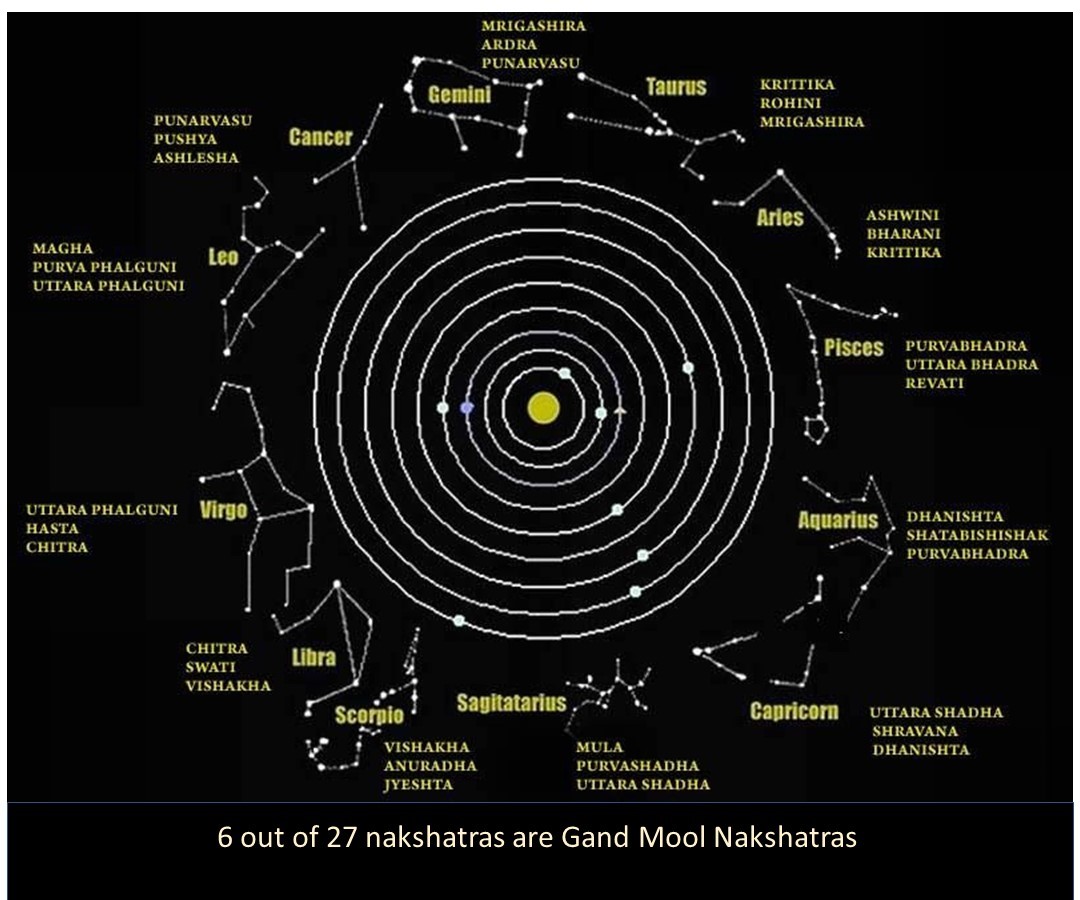
These junctional points are considered unstable due to the symbolic and elemental opposition between fire and water. This transition is known as the Gandanta zone, and when the Moon passes through nakshatras located on these cusps, it is called the Gand Mool period
Which Nakshatras are Considered Gand Mool?
There are six
nakshatras associated with the Gand Mool concept:
|
Watery Sign |
Last Nakshatra |
Fiery Sign |
First Nakshatra |
|
Cancer ♋︎ |
Ashlesha |
Leo ♌︎ |
Magha |
|
Scorpio ♏︎ |
Jyeshtha |
Sagittarius ♐︎ |
Moola |
|
Pisces ♓︎ |
Revati |
Aries ♈︎ |
Ashwini |
Thus, the six Gand
Mool nakshatras are:
Ashwini, Ashlesha, Magha, Jyeshtha, Moola, and Revati.
Each of these
nakshatras sits at a sensitive energetic crossroad, and their Sandhi position
makes them astrologically volatile.
How Often Does Gand Mool Occur in a Month?
Since the Moon takes about 27.3 days to orbit the zodiac and completes all 12 signs, it will naturally pass through all three Gand Mool points each month giving 3 Gand Mool periods each month. Every Gand Mool period will last around 48 hours.
Most Critical Period During Gand Mool
While the entire
transit through Gand Mool nakshatras is important, the most astrologically
sensitive time is when the Moon moves from the last pada (fourth
quarter) of the watery sign nakshatra into the first pada (first
quarter) of the fiery sign nakshatra.
This approximately 12-hour
window is considered the core of instability.
It is during this short period that the energetic turbulence is strongest —
making it crucial for:
Precautions During Gand Mool Period
According to Vedic astrology, the following precautions are highly advised:
❌ Avoid Major Life Events: Marriage,
house warming (Griha Pravesh), starting new ventures, and signing
important contracts should be postponed.
👶 Birth During Gand Mool Nakshatra: What It
Means
If a child is born
when the Moon is placed in one of the six Gand Mool nakshatras, special care is
advised. This placement can
lead to physical and mental health issues, can affect child's parents,
siblings, or other close relatives. It reflects a karmically intense birth needing appropriate balance and
remedy.
🕉️ Remedies for Gand Mool Birth: Gand Mool
Nakshatra Shanti Puja
To neutralize any
imbalance or karmic obstruction from a Gand Mool birth, the Gand Mool Shanti
Puja is recommended.
When Should It Be Performed?
The Shanti Puja is
traditionally performed on the 27th day from birth, when the Moon
returns to the same nakshatra.
Key Components of the Puja Include:
Ganapati Puja for obstacle removal
Navagraha Shanti to pacify planetary influences
Nakshatra Devata Invocation for the specific nakshatra
Chanting of Vedic mantras and offering of Naivedya, Vastra, Deepa
Charity to Brahmins, including food, clothes, and dakshina
This ritual acts as a spiritual safeguard and aligns the child’s energy with cosmic harmony.
Why the Name 'Gand Mool'?
The term Gand Mool is derived from two Sanskrit words:
Gand (गण्ड) = knot, joint, or conjunction point
Mool (मूल) = root or foundation
Together, Gand Mool symbolizes a karmic knot at the root of consciousness, where planetary vibrations are at a tipping point — neither fully settled nor completely disrupted. It is a space of rebirth, transformation, and potential vulnerability.
The Gand Mool
nakshatras hold great esoteric and astrological importance. While the energy
during these periods is unstable, Vedic astrology does not preach fear.
Rather, it provides clear timing and spiritual tools for harmonizing
with celestial rhythms. With proper understanding and rituals like Gand Mool
Shanti Puja, one can overcome imbalances and activate the higher qualities
of these powerful nakshatras.